

01
El Burro Heights
Formwork, rebar, a pumped pour, then columns, walls and roof. The full ten-step build.
A construction job for FiveM. Crews take a contract from bare ground to handover, one synced stage at a time.
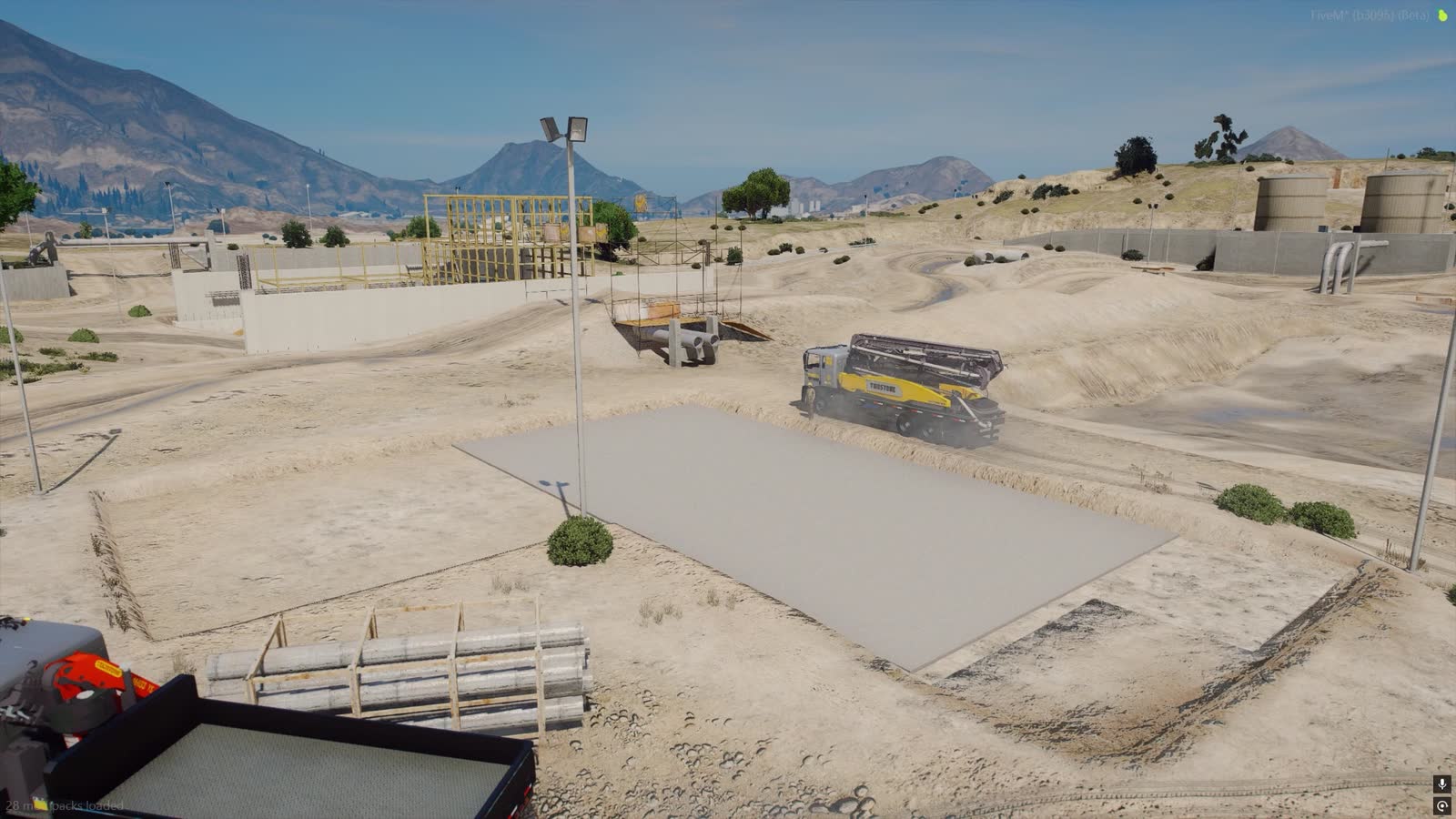
Thirty-two panels are carried out and stood around the edge of the slab. Nothing is pre-placed: every site starts as bare ground and the outline only exists once a crew has walked it out.
Eighty-four mesh pieces go down inside the formwork, one at a time. The count is held on the server, so two players working the same grid can never fill the same square twice.
A mixer feeds the pump and the boom reaches over the slab, pouring it in four quadrants. This is the phase the crew has to coordinate — one player on the remote, the rest keeping the mixer coming.
The formwork comes off the cured slab, then ten vertical columns are slung under the crane and set into place. From here the shape of the building starts to read from the street.
Rebar tying, then the walls, then the ceiling deck over them. Every placement is broadcast to the whole zone, so players who are not in the crew watch the building go up in real time.
Upper walls, the roof, and a finishing pass that clears the site. The crew is paid on the split the leader set, and the building stays standing for everyone on the server.
Formwork, rebar, a pumped pour, then columns, walls and roof. The full ten-step build.
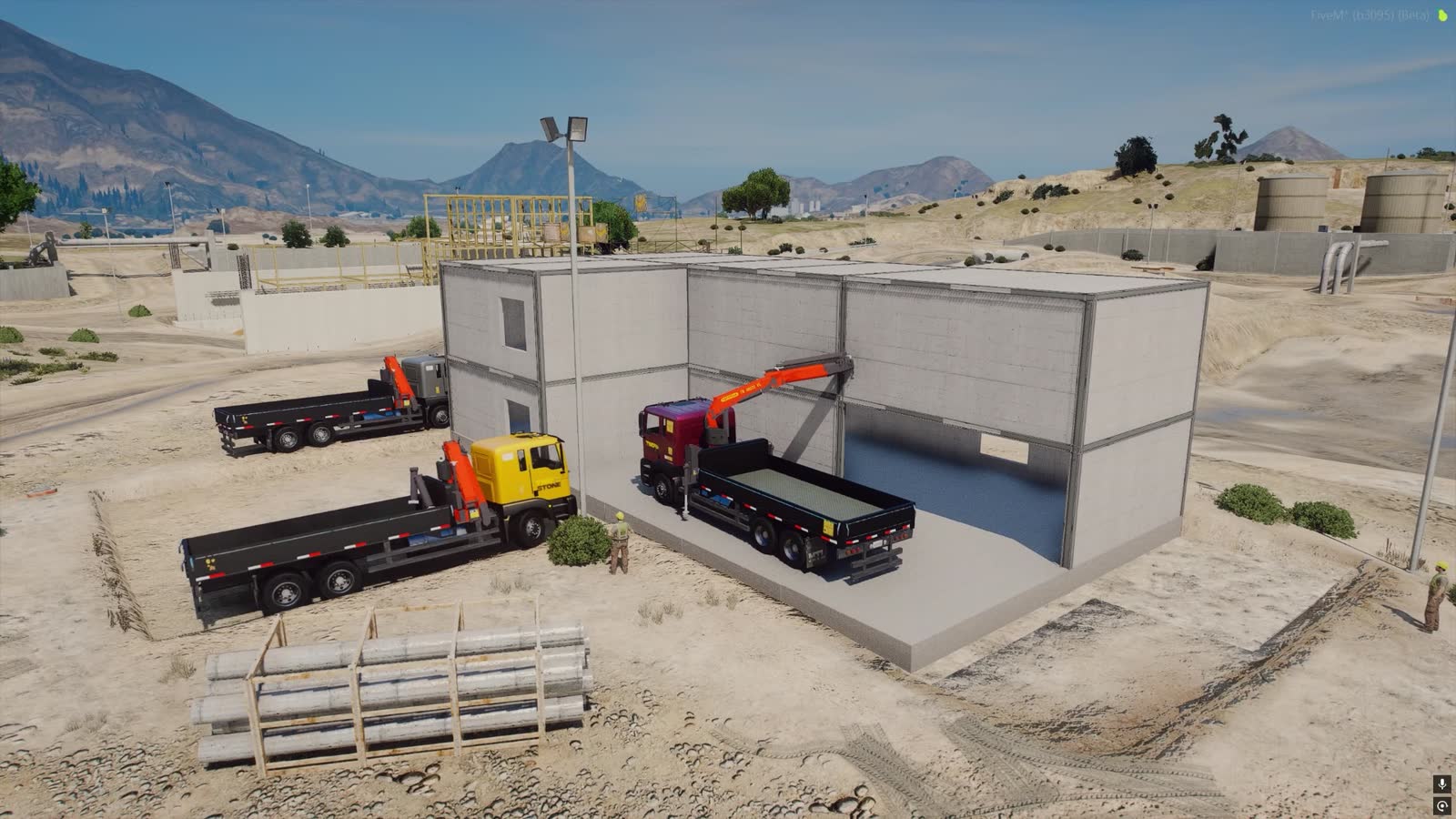
Precast panels come off the flatbed and are set one slot at a time.
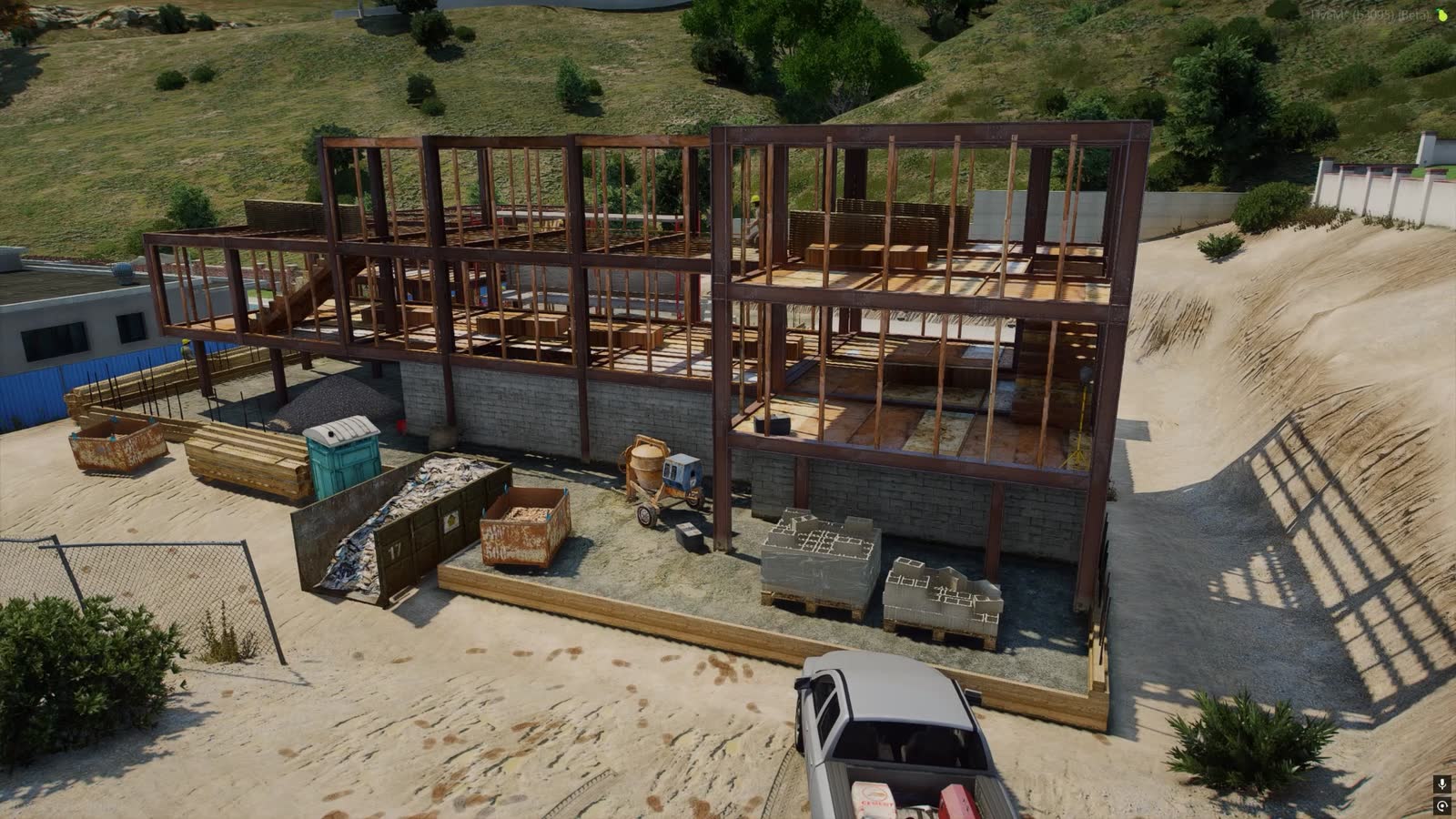
A steel skeleton closed in bay by bay, boards carried up by hand.
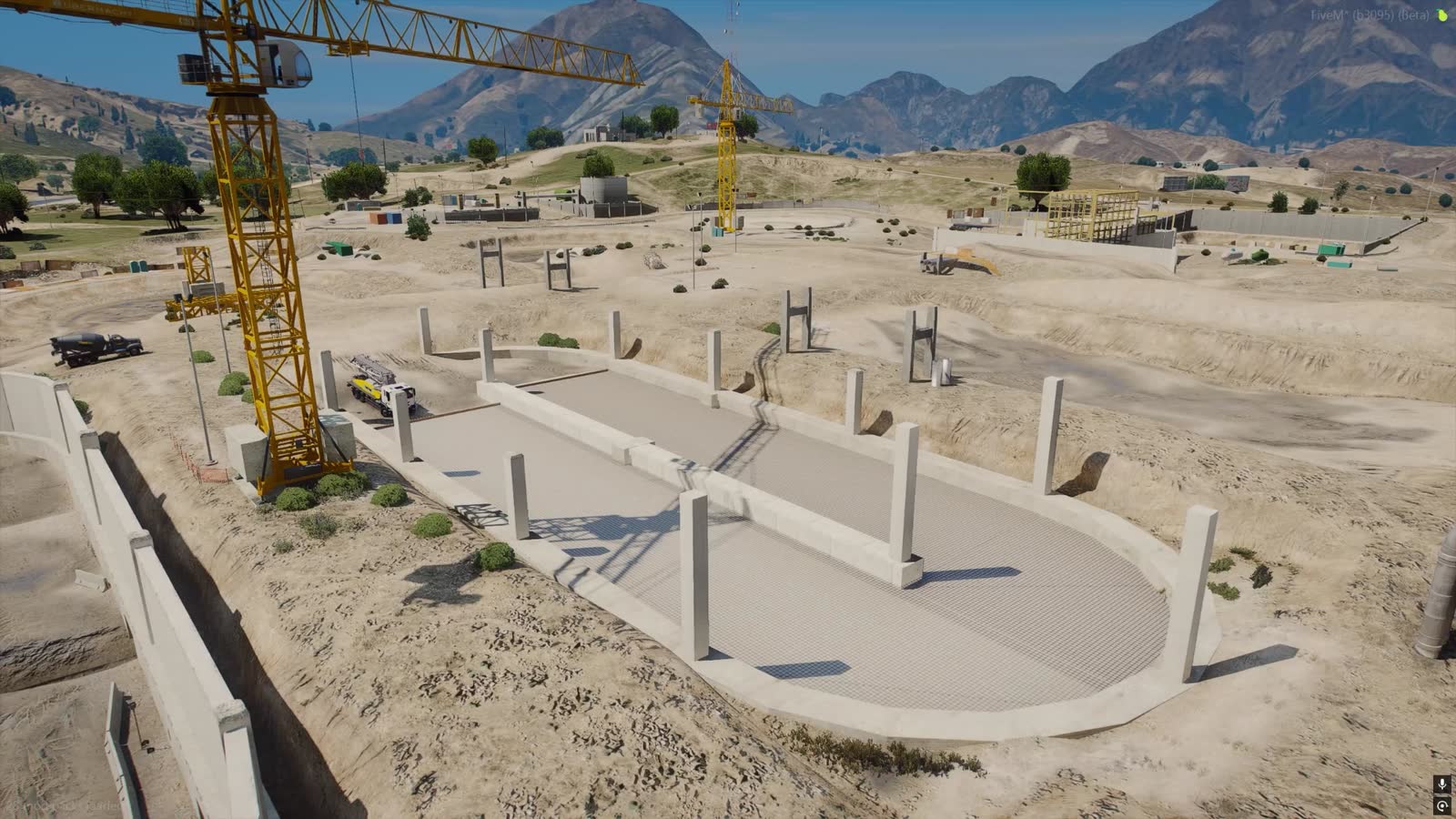
Two phases: the pump lays the base, then the crane stands the wall around it.
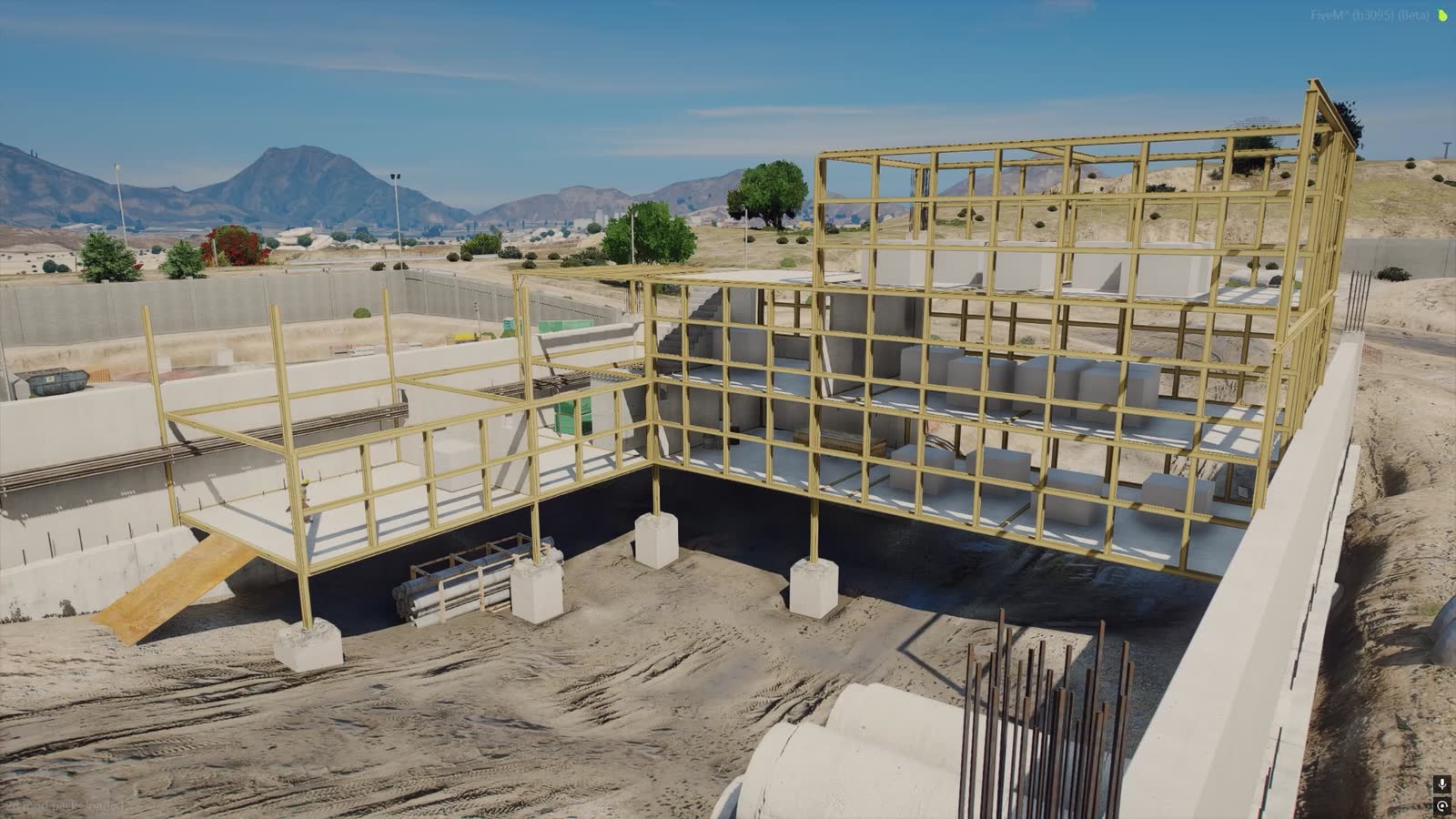
Decks and frame raised around the shell before the façade goes on.
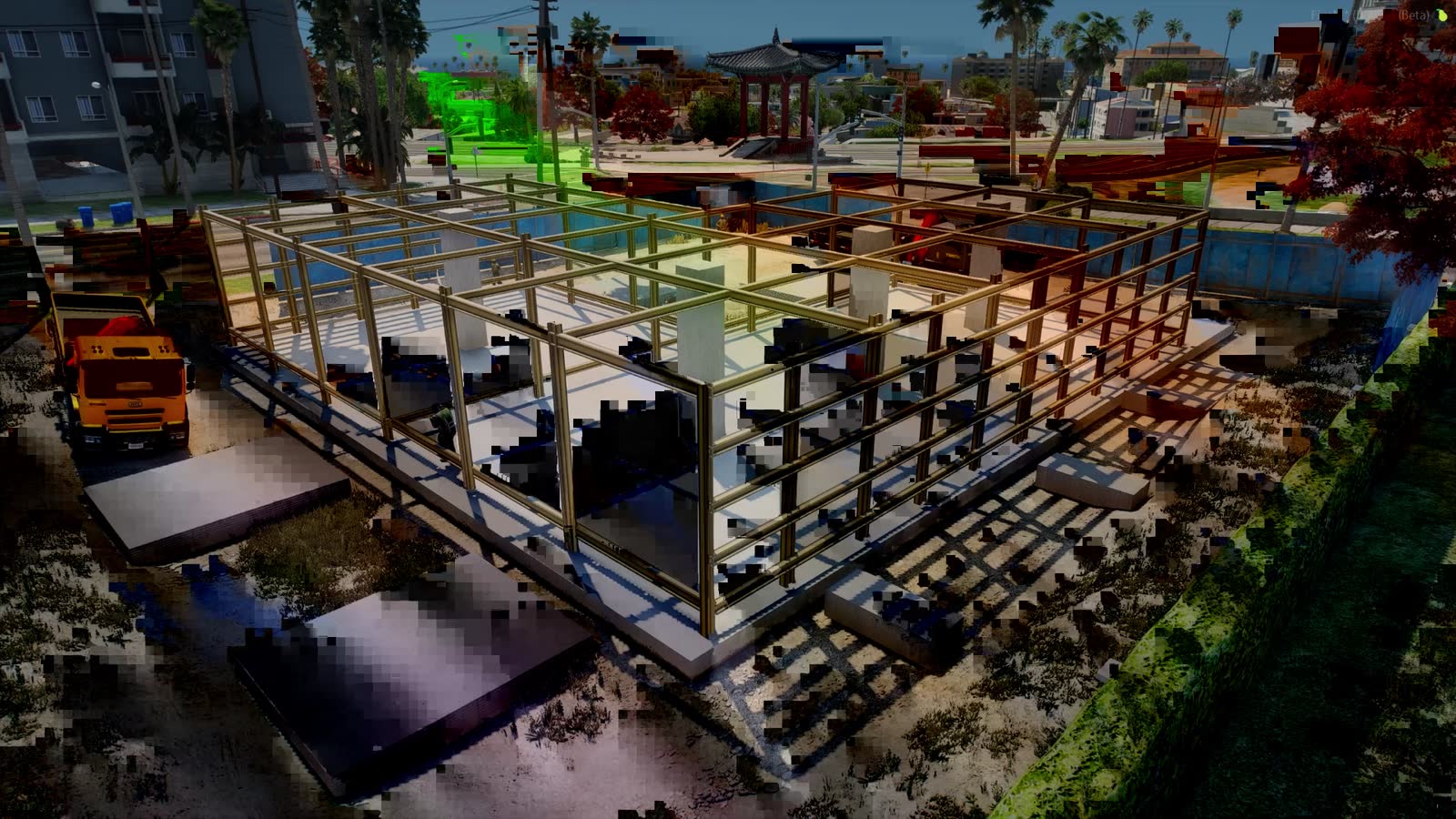
A long open frame beside the water, worked into the night.
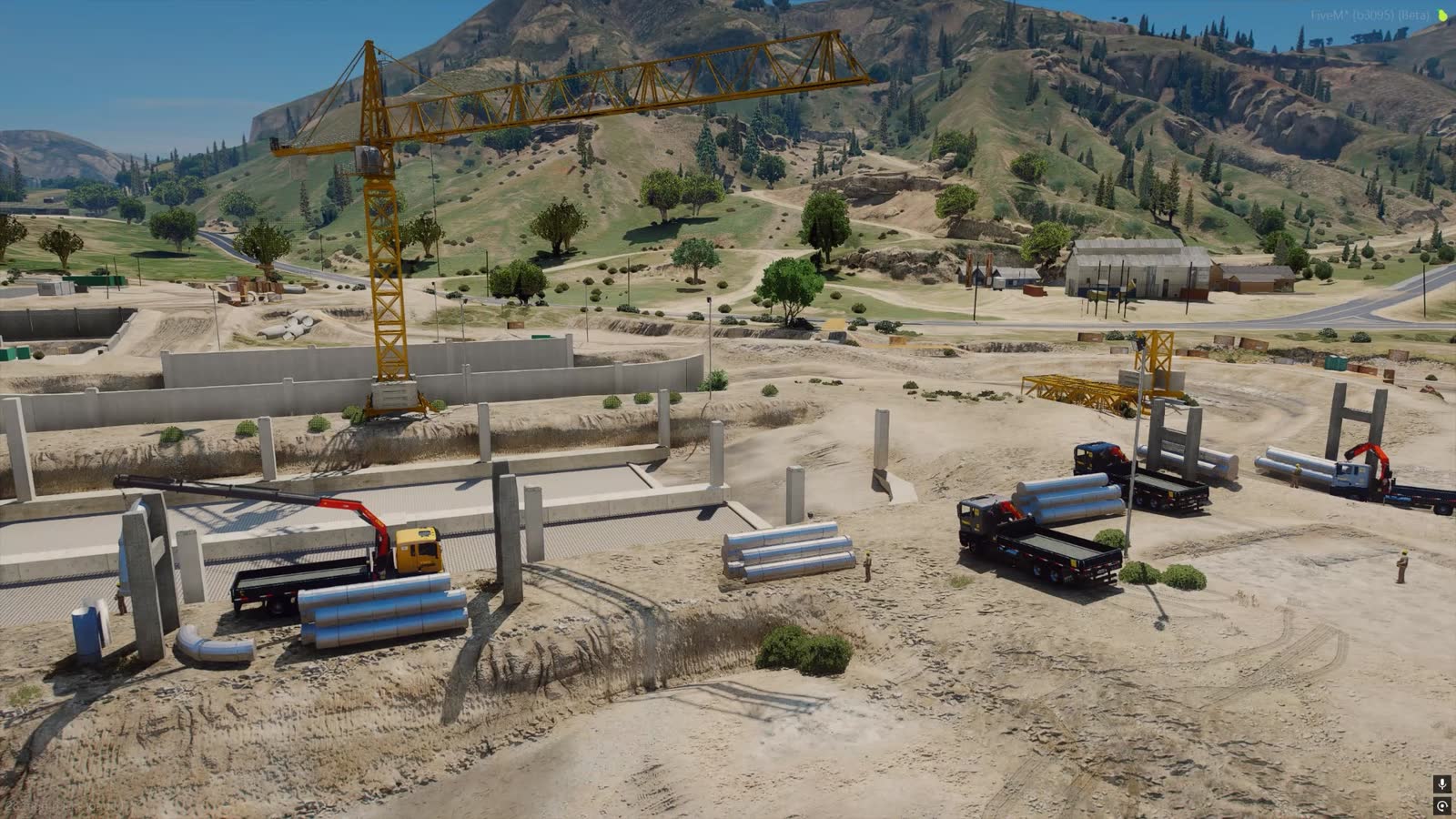
Pipes lifted off the pile and lowered into open trenches. No fixed order — every trench is open from the start.
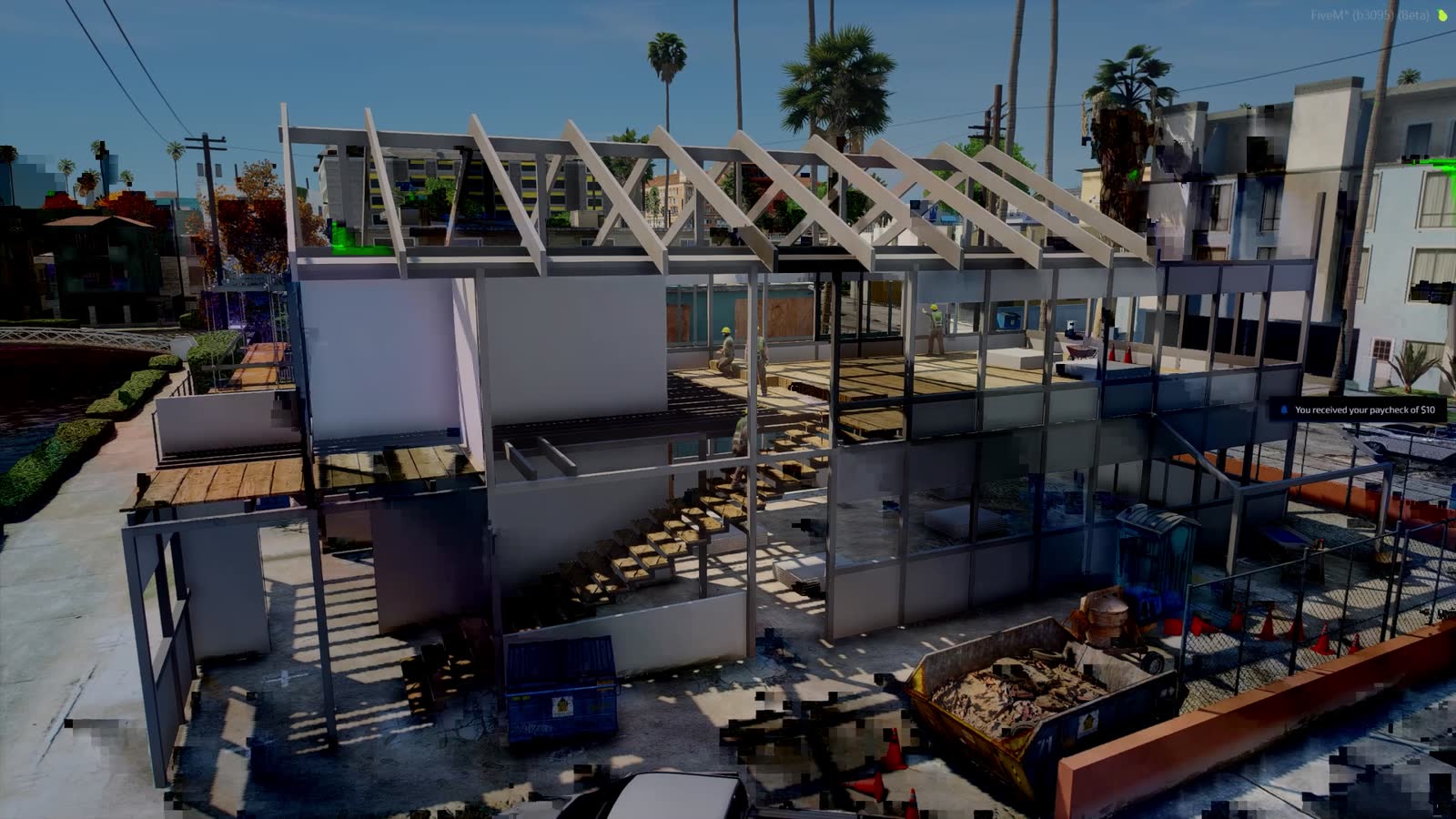
Ninety-eight slots: the walls carried by hand, the beams and roof set by crane.
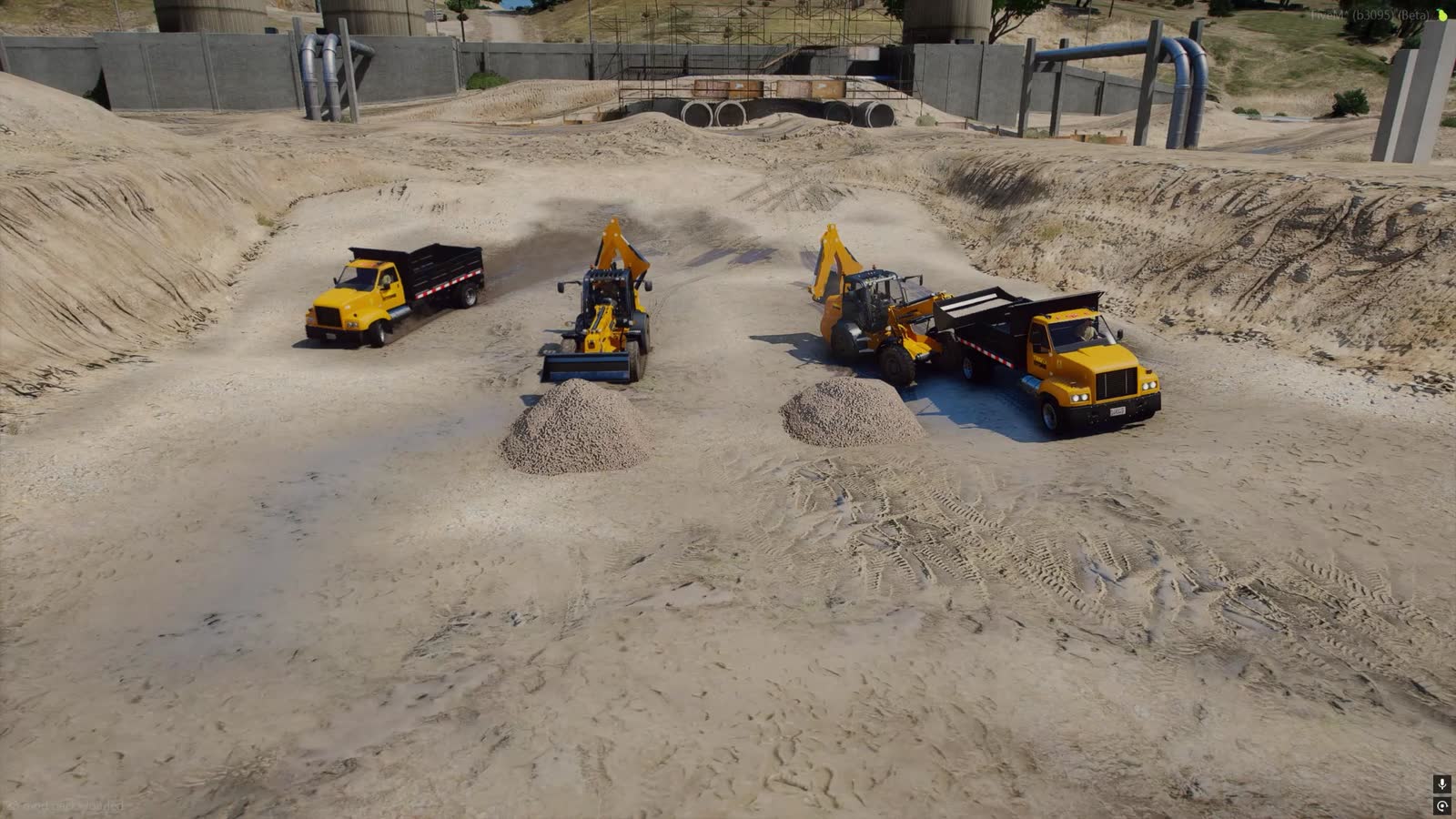
The loader digs the pit, tip trucks haul it away, then the paving goes back down.
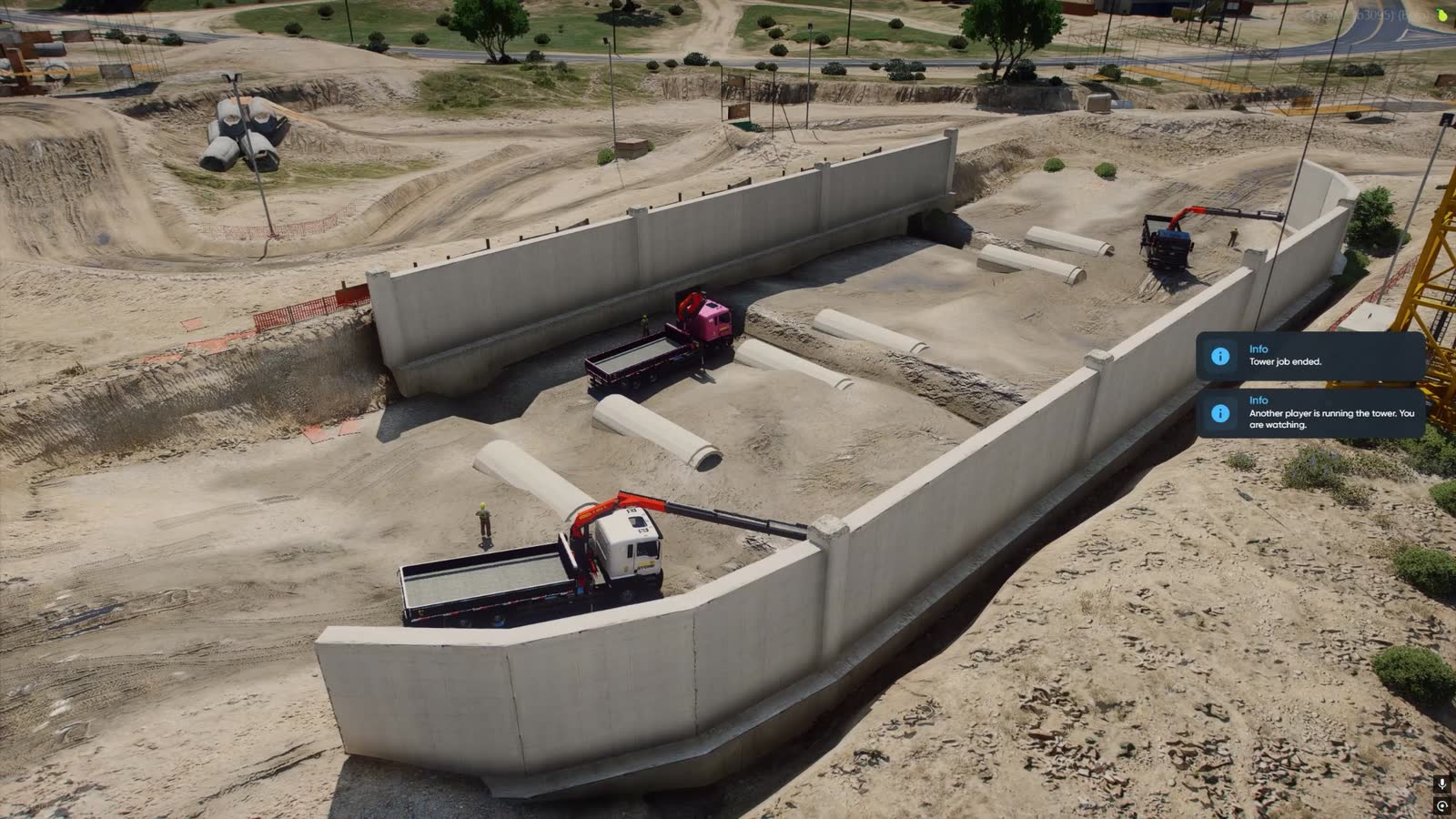
Precast sections hauled in and dropped into the cut, one after another.
Every region is its own mini-job with its own mechanic, and every one of them answers to the same server.
A blueprint-driven foundation build, tower-crane stone setting, 28-pipe laying, a 174-slot façade puzzle, excavation and haulage, lumber stacking, decking, wall and roof assembly, and a cross-zone crane haul. Each one is its own job, not the same loop on a different lot.
Every slot and every payout is reserved through a server callback — the client never keeps a count of its own. Placements are carry-proof, distance-checked, rate-limited and slot-locked.
A player who is not in your crew still sees the piles, the carried loads and the machines moving. Crew members get the scene, the interface and the pay; anyone in the zone gets the sight of it.
A tower crane with a claimable operator seat, a mobile crane with a 21-part boom on four joints, and a concrete pump with 26 hydraulics and real pour. All three are driven from a handheld remote on foot — no sitting in a driver seat.
Invite from the menu, split the reward by percentage, and reconnect straight back into your slot after a crash. Each job sets its own minimum and maximum crew on top of the lobby cap.
Machines simplify by distance in tiers, and every visual layer — rope sway, hydraulics, particles, outlines, sound — is an independent switch in the player's own settings. A weak machine turns things off without changing the server.
A blueprint tool places a site and its zone in the world and picks from 27 house designs, with a health page that tells you when a site has no zone or two sites share one. No config editing to add a build.
Each spot carries its own stock. Players rent against a deposit, bring the vehicle back, and damage is settled on return — all through a single spawn path that tags who owns the machine.
Open lobbies and how far each has got, today's and this week's payouts, per-region completion and abandon rates, a player search, and an event log kept in server memory.
A validator reads the buyer-editable config at start-up and prints the exact file and key behind an unknown job type, a broken zone or a mis-bound crane — instead of leaving a region silently dead.
English, Turkish, German, Spanish, French, Hungarian, Japanese, Dutch, Portuguese, Romanian, Russian and Swedish ship with it, each a complete translation. Every action is rebindable from the settings menu, split across general, mobile crane, pump and tower crane pages.
No .sql file to import. On first start the resource creates its own tables, and on later versions it adds the columns and indexes it is missing rather than asking you to run anything by hand.
QBCore, ESX, vRP, vRP2 and a standalone bridge ship with it, each in its own file. Config, locales and the blueprint list stay editable after purchase, so the pay, the wording and the sites are yours.
Twelve construction jobs, three machine systems, one purchase.